|
|||||||||||||||||||||
|
|
|||||||||||||||||||||
|
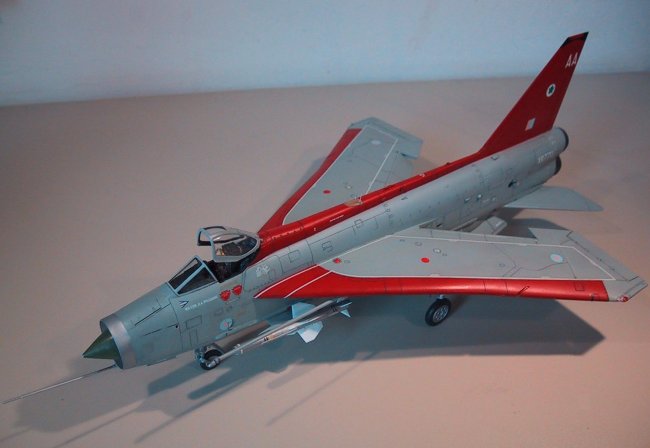
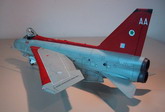
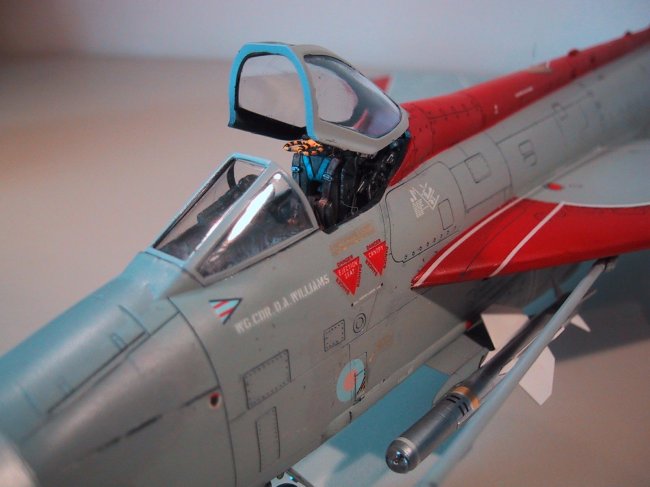
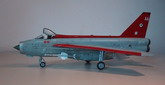
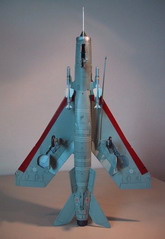
The Lightning was one of the few survivors of the “Sands” white paper published by the British Government that stated that air defence of the UK was going to be undertaken by SAM’s. Luckily the project was too far in advance for it to be cancelled and with some swift sleights of hands by not changing the project number to confuse the government, the Lightning was finally brought into service. Bear in mind that the design of the Lightning was started just after World War 2 by the same team that designed the Canberra (B-57) and entered Sqn service in 1960. Basically it was two whacking great Rolls Royce Avon 301 engines with a pilot perched on top. The unusual design of engines mounted on top of each other meant that 1 engine out was a doddle as there would be no problems with asymmetric trim. The Lightning was the UK’s only home grown supersonic fighter and it had performance in abundance. One pilot after his first flight in it stated that he was with it all the way until he released the brakes at the start of the runway! Its only major drawback was that its Avon’s were extremely thirsty and meant that it only had short legs and was better suited as a point defence interceptor. The F.6 attempted to redress this with a large ventral tank containing extra fuel and a gun pack. As for manoeuvrability, a few Phantom drivers, then the premier Air to Air machine found that they could not out turn, out climb or keep up in a close range dogfight.
Whilst the Lightning does not have the sleek elegance of the other UK fighter of its era, the Hunter. I think that it has a very purposeful look about it. So for all you jet builders who think that grey is the only colour, have a bash at a good piece of British engineering and see for yourself what the Lightning is all about. Greg Buckley
|
|
Photos and text © by Greg Buckley